Category Archives: Liver Health

Coffee Consumption Reduces Risk of Liver Cancer

FacebookTwitterLinkedInPinterestEmailShare

“Our research confirms past claims that coffee is good for your health, and particularly the liver,” said Carlo La Vecchia, MD. (Credit: © volff / Fotolia)

Coffee consumption reduces risk of hepatocellular carcinoma (HCC), the most common type of liver cancer, by about 40 percent, according to an up-to-date meta-analysis published in Clinical Gastroenterology and Hepatology, the official clinical practice journal of the American Gastroenterological Association. Further, some data indicate that three cups of coffee per day reduce liver cancer risk by more than 50 percent.

Read more. 

Posted in Science Daily, October 22, 2013

Protein Myths and Your Liver

FacebookTwitterLinkedInPinterestEmailShare

Liver-friendly diets are a common concern for those with chronic hepatitis B wishing to make healthy lifestyle choices. Protein is essential to all, but there are healthier ways to consume necessary proteins.  Please enjoy this informative blog from the Al D. Rodriguez Liver Foundation – ADRLF, on Protein Myths and Your Liver written by ToniMarie Bacala.

We all love need protein – whether it be from animals or plants—protein gives us essential amino acids we need to keep our bodies strong and healthy. But how much do we really understand about protein and its effects on our organs, especially the liver? Is there such as thing as too much protein, even if its from vegetables and grains? Let’s delve into two popular protein myths and how we can ensure our protein intake is safe for our liver.

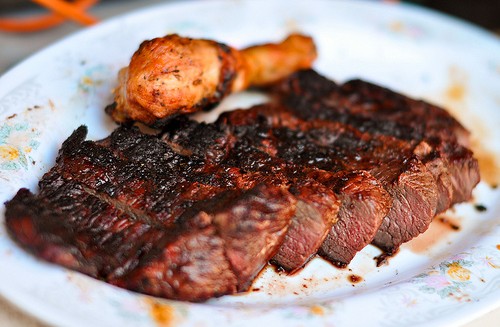
Love meat? Learn more about healthy proteins to protect you liver.
Love meat? Learn more about healthy non-animal meat proteins to protect you liver and keep your body healthy.

Protein is made of 20 different amino acids, but only 11 of which can be naturally synthesized by our body. The other types of protein come from the food we eat. Essentially, it’s safe to say that while protein helps in building the cell wall, strengthening muscle tissues and supporting cell functions, our body actually just needs certain types of amino acids.

So myth or truth? The best source of protein is animal meat. MYTH

Eating red meat requires our digestive system, as well as our liver to do a lot of work processing the heavy bulk of protein. Experts suggest limiting the amount of red meat we eat to at most one serving a day.

There are other good sources of proteins like whole grains, green vegetables, nuts, peas and beans. Fruits also contain small amounts of protein. Compared to animal meat, vegetables and beans have phytochemicals, antioxidants and other nutrients. Nuts and beans containing antioxidants help the liver process the food and beverage that we take in, making it a healthier source of protein.

Myth or truth? People desiring to build lean muscle mass can eat as much protein-rich food as they want.

MYTH.

There is such a thing as too much protein. While protein is an essential nutrient, the overall health of our body lies in having a balanced diet. People building up muscles such as athletes and bodybuilders are no different.

The advisable amount of protein intake for men also differs from women. Consult your doctor or a nutritionist who can give you the appropriate amount of protein you should include in your diet, as based on your weight, age and daily activities. There are also vegan bodybuilders who get much of their protein requirements from vegetables and grains.

Eating too much protein can cause several health conditions such as ketosis, organ failure, and heart diseases. Too much protein can also be dangerous and stressful to the liver. So look out for other protein myths with the basic truth in mind: Keep protein intake in moderation and explore the benefits of non-animal sources of healthy proteins.

What You Need to Know About Fatty Liver Disease and Liver Cancer

FacebookTwitterLinkedInPinterestEmailShare

Join the Hepatitis B Foundation, Monday, April 22 at 1 pm EST, 10 am PST, for the final webinar of the 3-Part Liver Cancer Webinar Series, “Liver Cancer and Fatty Liver Disease: What You Need to Know”, presented by liver disease expert, Kenneth Rothstein, MD.

There is an upsurge in fatty liver disease in the U.S. and around the world as a result of poor diet, consumption of alcohol, and sedentary lifestyle. Fatty Liver Disease occurs when fat makes up more than 5% -10% of the weight of your liver, which can be a result of either alcoholic, or non-alcoholic fatty liver disease (NAFLD). This accumulation of fat can cause inflammation and permanent scarring of the liver, which may lead to serious complications including liver failure, and liver cancer. Learn about fatty liver, which is largely preventable.

Liver cancer is the third leading cause of cancer-related deaths and the seventh most common cancer worldwide. Learn how to prevent liver cancer, along with screening, surveillance and treatments for liver cancer.

Dr. Rothstein is the Associate professor in the Department of Medicine, and chief of the Division of Gastroenterology and Hepatology at Drexel University College of Medicine. He also serves as medical director of Abdominal Transplantation at Hahnemann University Hospital. 
Dr. Rothstein is a leading expert in the field of hepatology, with over 20 years of experience. He specializes in the treatment of liver disease and liver transplantation, particularly treating the complications of cirrhosis, including liver cancer. He is also a recognized expert on new treatments for hepatitis B and C.

“Fatty Liver Disease and Liver Cancer: What You Need to Know” webinar details:

Presented by: Dr. Kenneth Rothstein
Date: Monday, April 22, 2013
Time: 1 pm EST, 10 am PST
Click here to register

Did you miss the previous webinars of the series? Feel free to download them and listen at your leisure:

Download the March 6th Webinar and listen to Hepatitis B and Liver Cancer: What You Need to Know, by Dr. Robert Gish.
Download Now

Download the March Webinar and watch the video, Hepatitis C and Liver Cancer: What you Need to Know, by Dr. LaBrecque.
Download video

For additional accurate, easy-to-understand information on liver cancer, visit the Hepatitis B Foundation’s dedicated website, www.LiverCancerConnect.org.


HBsAg Levels Linked with Fibrosis in HBeAg-Positive Patients

FacebookTwitterLinkedInPinterestEmailShare

Below is a publication from “Healio Hepatology, February 21, 2013 – HbsAg Levels Linked with Fibrosis in HBeAg-Positive Patients” , showing the correlation between HBsAg and HBV DNV virus levels and the risk of moderate to severe fibrosis in HBeAg positive patients.

Patients with hepatitis B who tested positive for hepatitis B e antigen were at increased risk for moderate-to-severe fibrosis with lower levels of hepatitis B surface antigen in a recent study.

Researchers evaluated serum samples and liver biopsy results from 406 treatment-naive patients with chronic hepatitis B. HBV genotype and hepatitis B e antigen (HBeAg) status were recorded along with levels of HBV DNA and hepatitis B surface antigen (HBsAg).

HBeAg-positive patients (n=101) had a higher mean fibrosis stage than HBeAg-negative patients (1.86 ± 1.18 vs. 1.40 ± 0.99; P<.001) and had greater levels of HBV DNA (7.06 ± 1.71 vs. 4.12 ± 1.67)and HBsAg (4.24 ± 0.9 vs. 3.53 ± 0.92) (P<.0001 for both). Investigators observed strong correlations between HBV DNA and HBsAg levels (r=0.44; P<.0001) and between fibrosis severity and HBsAg levels (r=0.43; P<.0001) among HBeAg-positive patients, but not among HBeAg-negative participants.

HBeAg-positive patients with moderate-to-severe fibrosis had lower HBsAg (3.84 ± 1.01 vs. 4.63 ± 0.58; P<.0001)and HBV DNA levels (6.47 ± 1.81 vs. 7.62 ± 1.40; P<.001) than those with mild or no fibrosis. HBeAg-positive patients with genotypes B, D or E had significantly higher HBsAg levels than HBeAg-negative patients, along with higher HBV DNA levels regardless of genotype.

Modeling analysis established an HBsAg cutoff of 3.85 log IU/mL-1 with a theoretical sensitivity of 100%, specificity of 86% and NPV of 100% for predicting moderate-to-severe fibrosis among HBeAg-positive patients with genotypes B or C. Investigators noted that the small cohort size used to establish this cutoff requires further validation to be clinically useful.

“To our knowledge, the current study is only the second to associate an HBsAg cutoff with the prediction of fibrosis severity in CHB patients,” the researchers wrote. “It will be of considerable interest to see whether the serum HBsAg and HBV DNA levels in the patients infected with different genotypes are significantly different from the mean values of the overall HBeAg-positive group, and if they will require the development of genotype-specific cutoffs, or whether a single cutoff is applicable to all HBV genotypes.”

Disclosure: See the study for a full list of relevant disclosures.

Launch of New Patient-Focused Website at LiverCancerConnect.org

FacebookTwitterLinkedInPinterestEmailShare

A dedicated program of the Hepatitis B Foundation for patients and families 

The statistics are sobering. Liver cancer is the seventh most common cancer in the world, but the third leading cause of cancer-related deaths. Worldwide, more than 700,000 people are diagnosed with primary liver cancer each year, accounting for more than 600,000 deaths annually. Equally disturbing is the fact that while the incidence rates of most cancers have declined in recent years, the incidence rate for liver cancer is increasing.

But there is encouraging progress in the fight against liver cancer. Scientific research into new treatments is yielding promising results. And perhaps more significantly, the major causes of liver cancer— such as chronic hepatitis B or hepatitis C infections, and cirrhosis — are largely preventable. A safe and effective vaccine against hepatitis B has been available since 1986. In fact, this vaccine was named the world’s first “anti-cancer” vaccine, because it prevents chronic hepatitis B infection, the world’s leading cause of liver cancer. While no vaccine for hepatitis C currently exists, new drugs can eliminate the virus, thereby halting the progression to liver cancer. And cirrhosis can be avoided by preventing chronic hepatitis B and C infections, limiting alcohol intake, and preventing fatty liver disease associated with obesity.

Knowing that these risk factors are preventable makes it all the more important to identify people at risk for liver cancer, educate them about prevention and treatment options, and direct them to appropriate medical care.

To provide accurate, easy-to-understand information to people diagnosed with liver cancer, the Hepatitis B Foundation has created the first patient-focused website, www.LiverCancerConnect.org. The website aims to help people better understand how liver cancer is diagnosed and how it can be treated or prevented. In addition, wwwLiverCancerConnect.org includes a Drug Watch of potential new liver cancer therapies, an expanding directory of liver cancer specialists, and a clinical trials listing.

The Hepatitis B Foundation is also organizing a series of webinars in 2013 to educate the public about the link between liver cancer and its main risk factors, namely hepatitis B and C infections and cirrhosis caused by fatty liver disease. The webinars, presented by leading international experts in liver diseases, will explain what primary liver cancer is, the importance of liver cancer screening and surveillance, and the treatment options and clinical trials that are currently available. Additional information will be announced on both the Liver Cancer Connect website and HBF’s blog when it is available.

The Foundation invites you to use www.LiverCancerConnect.org to learn about liver cancer and its treatment options, and to locate liver cancer specialists and clinical trials. We welcome your feedback and suggestions at  so that we may continue to build on this valuable resource for the global liver cancer community.

Liver Cancer Connect is available on Facebook and Twitter. Join LCC on Facebook at http://www.facebook.com/LiverCancerConnect and follow LCC on twitter with the handle @LiverCancerConn.