
Category Archives: Research

HBV Journal Review – July 2014

FacebookTwitterLinkedInPinterestEmailShare

ChrisKHBF is pleased to connect our blog readers to Christine Kukka’s monthly HBV Journal Review that she writes for the HBV Advocate. The journal presents the
 latest in hepatitis B research, treatment, and prevention from recent academic and medical journals. This month, the following topics are explored:

  • Ground-Breaking Study Finds Antiviral Treatment Does Reduce Cancer Risk
  • Sequential Treatment of Antivirals Followed by Interferon Spurs HBeAg Seroconversio
  • Is the Current Recommended Dose of Entecavir Too Low for Some Patients?
  • Measuring Liver Stiffness, Spleen Size and Platelets Can Predict Cancer Risk
  • Tenofovir Effective in Patients with Lamivudine Resistance
  • Entecavir and Adefovir Combo Works Best in Lamivudine-Resistant Patients
  • When Is It Safe to Stop Antivirals? Experts Still Not Sure
  • Liver Stiffness Test Identifies Which Patients Develop Liver Damage After Treatment Stops
  • Study Suggest Hepatitis B Immunization Could Cut Diabetes Risk by Half
  • Herbal Medication Treatment Linked to Liver Failure in Patient with Hepatitis B

HBV Journal Review

July 1, 2014
Volume 11, Issue 7
by Christine M. Kukka

Ground-Breaking Study Finds Antiviral Treatment Does Reduce Cancer Risk

For the first time, an authoritative study has found that antiviral treatment appears to reduce the risk of hepatitis B virus (HBV)-related liver cancer. Even though treated patients had more liver damage, their cancer rates were similar to untreated, healthier patients.

Researchers from the U.S. Centers for Disease Control and Prevention examined the health records of 2,671 hepatitis B patients treated at four health centers across the U.S. between 1992 and 2011. Half of the patients were Asian-American and about 31% (820) had been treated with antivirals. The treated patients tended to have more liver damage, were older, male and less likely to be Asian-American than untreated patients in the study.

Researchers, reporting in the June issue of the journal ofClinical Gastroenterology and Hepatology, found that 67 (3%) of the 2,671 patients developed liver cancer over the study period. Twenty of the 820 patients treated with antivirals developed cancer, compared to 47 of the 1,851 untreated patients.

Treated patients with viral loads less than 20,000 IU/mL had a significantly lower risk of cancer than untreated patients with similarly low viral loads.

Antivirals appeared to confer some protection against liver cancer even in patients with fibrosis (liver inflammation) and cirrhosis (liver scarring), suggesting that viral loads may be the primary culprit behind liver cancer. By suppressing viral load, liver cancer was avoided in many of these high-risk patients with serious liver damage.

Researchers wrote, “…We found that antiviral treatment had a beneficial effect across a spectrum of viral load levels (and disease severity.)”

Source: www.ncbi.nlm.nih.gov/pubmed/24107395

Sequential Treatment of Antivirals Followed by Interferon Spurs HBeAg Seroconversion 
Chinese researchers found that hepatitis B “e” antigen (HBeAg)-positive patients who were treated first with the antiviral entecavir (Baraclude) and then with pegylated interferon achieve a higher rate of HBeAg seroconversion (loss of HBeAg and development of “e” antibodies) than patients treated with only entecavir.

Continue reading the HBV Journal Review…

 

Antiviral Therapy May Lower Risk of Liver Cancer – MedicalResearch.com Interview with Dr. Stuart Gordon MD

FacebookTwitterLinkedInPinterestEmailShare

UnknownThank you MedicalResearch.com for this interview and insights by Dr. Stuart Gordon, MD, Gastroenterologist, Henry Ford Hospital, Detroit, MI.


MedicalResearch: What are the main findings of the study?

Dr. Gordon: In a large American cohort of Hepatitis B patients, those who took antiviral therapy had a significantly lower risk of developing liver cancer than those who did not take such therapy.

MedicalResearch: Were any of the findings unexpected?

Dr. Gordon: Similar findings have been noted in other parts of the world, but not in american populations. In addition, this report showed that the protective effect of antiviral therapy (against developing primary liver cancer) was found not just among patients with cirrhosis, who are at greatest risk, but also among those with lesser degrees of liver fibrosis. This finding was rather unique.

MedicalResearch: What should clinicians and patients take away from your report?

Click to read interview in its entirety 

Antiviral Therapy May Prevent Liver Cancer in Hepatitis B patients

FacebookTwitterLinkedInPinterestEmailShare

images-2

Useful confirmation of what we already thought was true. Good news…

(HealthNewsDigest.com) – DETROIT, June 9, 2014  –

Researchers have found that antiviral therapy may be successful in preventing hepatitis B virus from developing into the most common form of liver cancer, hepatocellular carcinoma (HCC).

That was the finding of a study published in the May issue of Clinical Gastroenterology and Hepatology. Investigators from Henry Ford Health System in Detroit, Geisinger Health System in Danville, Pa., and Kaiser Permanente in Honolulu, Hawaii and Portland, Ore. participated in the study, along with investigators from the Centers for Disease Control and Prevention in Atlanta.

According to the first-of-its-kind analysis of more than 2,600 adult participants with hepatitis B, those treated with antiviral therapy had a significantly lower occurrence of HCC during a five-year follow up period. Overall, 3 percent of patients developed HCC during the study’s timeframe. But patients who received antiviral therapy were 60 percent less likely to develop HCC than untreated patients.

“The results of this study allow us to reassure our patients that we are not just treating their viral levels, but that antiviral therapy may actually lessen their chance of developing liver cancer,” said the study’s lead investigator, Henry Ford Health System’s Stuart C. Gordon, M.D., who worked closely with Henry Ford Senior Scientist Mei Lu in Detroit. Continue reading here.


HBV Journal Review – June 2014

FacebookTwitterLinkedInPinterestEmailShare

ChrisKHBF is pleased to connect our blog readers to Christine Kukka’s monthly HBV Journal Review that she writes for the HBV Advocate. The journal presents the
 latest in hepatitis B research, treatment, and prevention from recent academic and medical journals. This month, the following topics are explored:

  • Belatedly, National Panel Recommends Screening At-Risk Patients for Hepatitis B
  • Genotypes and Mutations Define the Course of Hepatitis B Infection
  • Older Patients Who Lose HBeAg After Treatment May Relapse
  • Tenofovir Proves Ineffective in Patient with Multiple Drug Resistance
  • Nearly All HBeAg-Negative Patients Relapse After Antiviral Treatment Stops
  • Studies Find Hepatitis Infection Does Not Increase Pancreatic Cancer Risk
  • Screening Pregnant Women for High Viral Loads Is Cost Effective
  • Hepatitis B Appears to Impede Fertility
  • Despite Low Viral Load, Infected People Can Still Infect Family Members
  • Good News: HBV Infection Rates Lower Than Expected Among Korean-Americans
  • Green Tea May Be an Effective Antiviral

HBV Journal Review

June 1, 2014
Volume 11, Issue 6
by Christine M. Kukka

Belatedly, National Panel Recommends Screening At-Risk Patients for Hepatitis B

Ten years after it recommended against screening the “general population” for hepatitis B, an independent national task force that creates prevention guidelines for primary care providers has finally recognized that certain high risk groups in the U.S. should be screened for hepatitis B.

Their recommendations, recently published in the Annals of Internal Medicine, come after numerous studies faulted primary care providers for failing to screen patients for hepatitis B and missing opportunities to treat patients for liver disease and immunize family members against hepatitis B virus (HBV) infections.

Other health care organizations, including the U.S. Centers for Disease Control and Prevention (CDC), the Institute of Medicine, and the American Association for the Study of Liver Disease, have been recommending for years that primary care doctors screen high-risk patients for hepatitis B, which has infected up to 2.2 million Americans.

The U.S. Preventive Services Task Force (USPSTF) recently issued clinical guidelines recommending that doctors screen the following patients for hepatitis B:

  • People from countries that have hepatitis B rates exceeding 2% (which includes Asia, Africa, Central Europe and parts of Central and South America).
  • U.S.-born people whose parents immigrated from countries with high rates of HBV infection.
  • HIV-positive people, injecting drug users, men who have sex with men, and
  • Household contacts of people infected with HBV.

The task force’s guidelines suggest that because an effective vaccine to protect against the infection and effective treatments for hepatitis B are now available, they decided to issue these recommendations. However, both the vaccine and effective treatments have been available for more than a decade.

“In the 2004 recommendation, the USPSTF focused only on the general population,” the authors wrote in the recommendations. “In the current recommendation, the USPSTF focused on high-risk populations as it considered new evidence on the benefits and harms of antiviral treatment, the benefits of education or behavior change counseling, and the association between improvements in intermediate and clinical outcomes after antiviral treatment.” The task force noted that it, “…found inadequate evidence that education or behavior change counseling reduces disease transmission.”

Source: www.uspreventiveservicestaskforce.org/uspstf/
uspshepb.htm

Genotypes and Mutations Define the Course of Hepatitis B Infection
Researchers are increasingly finding that HBV genotypes or strains—and the mutations that they generate—can determine the severity of a patient’s infection.

Each of the world’s 10 genotypes and their mutations have different characteristics that can increase risk of cirrhosis and liver cancer, determine whether an infection becomes chronic, and basically determine a patient’s destiny, according to a recent study, published in the May issue of the World Journal of Hepatology …

Continue reading the HBV Journal Review… 
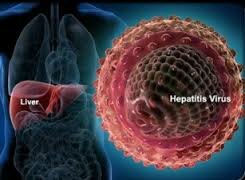
Alnylam Discloses HBV Program, Shows 2 Log HBSAG Knockdown with Research-Grade SNALP Tech

FacebookTwitterLinkedInPinterestEmailShare

HepatitisBVirus-1

Harnessing the Power of RNAi Gene Silencing in Quest of a Cure for Chronic Hepatitis B, and the HBV KnockDown blog written by Dirk Haussecker, who believes it’s about time everyone got serious about a functional cure for hepatitis B. 

Following cryptic remarks during a conference call earlier this year, Alnylam today officially announced its entry into the cure-HBV race.  In impressive data presented at the ongoing TIDES meeting, the company showed that up to 0.5mg/kg SNALP-siRNA was able to knock down HBsAg by ~2 log (99% knockdown) in infected chimpanzees.  The data had been generated by Merck from which Alnylam acquired the RNAi assets in January.  The goal is now to apply some of the learnings generated with Merck’s research-grade SNALP LNP technology and come up with a new candidate based on Alnylam’s GalNAc delivery platform (IND to be filed end of 2015).
In addition to the impressive HBsAg knockdowns, 3-4log knockdowns of viral DNA in serum were seen in the 4 chimpanzees.  In the most viremic chimp, the 4log lowering of viral load was able to normalize liver enzyme (ALT) levels that had been elevated by ~5x ULN.  Intriguingly, in 2 chimps with normal ALTs at the time of treatment, liver enzymes started to increase after dosing had finished (ruling out SNALP LNP as the culprit) and in 1 case also well after viral DNA had started to recover following cessation of RNAi dosing.
Intriguingly, while viral DNA recovered in this short study involving the administration of 3 doses (for every chimp 0.125mg/kg, then 0.25mg/kg, then 0.5mg/kg) over a span of 40 days, there were indications of a desired immunological response similar to that seen withARC520 in the chimp study, most notably an elevation of interferon gamma accompanied by ~2x increases in ALT in 2 of the chimps.
The competition
 
With Tekmira, ISIS/GSK and now Alnylam (and possibly more to come) following on the heels of Arrowhead Research and ARC520, the competitive landscape is starting to look quite complex.  How it will play out will likely depend on the degree of HBsAg knockdown required (in relative and absolute terms) and who will run the right combination studies with other HBV agents, especially immune boosters such as interferon and possibly RT inhibitors (note: Alnylam speculates that RT inhibitor co-treatment will be beneficial and thereby justified its use of a single RNAi trigger).
If a deep multi-log HBsAg knockdown were required, it would favor Tekmira’s candidate which will be based on a 3rd gen SNALP LNP which can be considered superior to what came out of Merck’s copy-cat efforts subject of today’s presentation.  If lesser knockdowns were able to achieve comparable cure rates, then the power would shift to the subcutaneous versions by Alnylam and ISIS/GSK (esp. the likely GalNAc-based follow-up version).
For ARC520, especially at 2mg/kg and Tekmira probably just 6 months behind, the competition may prove too much, not least because in the 2-dose study in the chimpanzee, the HBsAg knockdown was less than a log (80%).  Granted it was an extremely viremic chimp and one of the RNAi triggers was a mismatch, but still.  If Arrowhead and/or Tekmira demonstrate increased cure rates in 2015, Arrowhead should waste no time and push a single-molecule DPC into development to potentially once again take the lead.
The big question is how far along the way to clinical translation is single-molecule DPC?  Tomorrow may provide an answer.